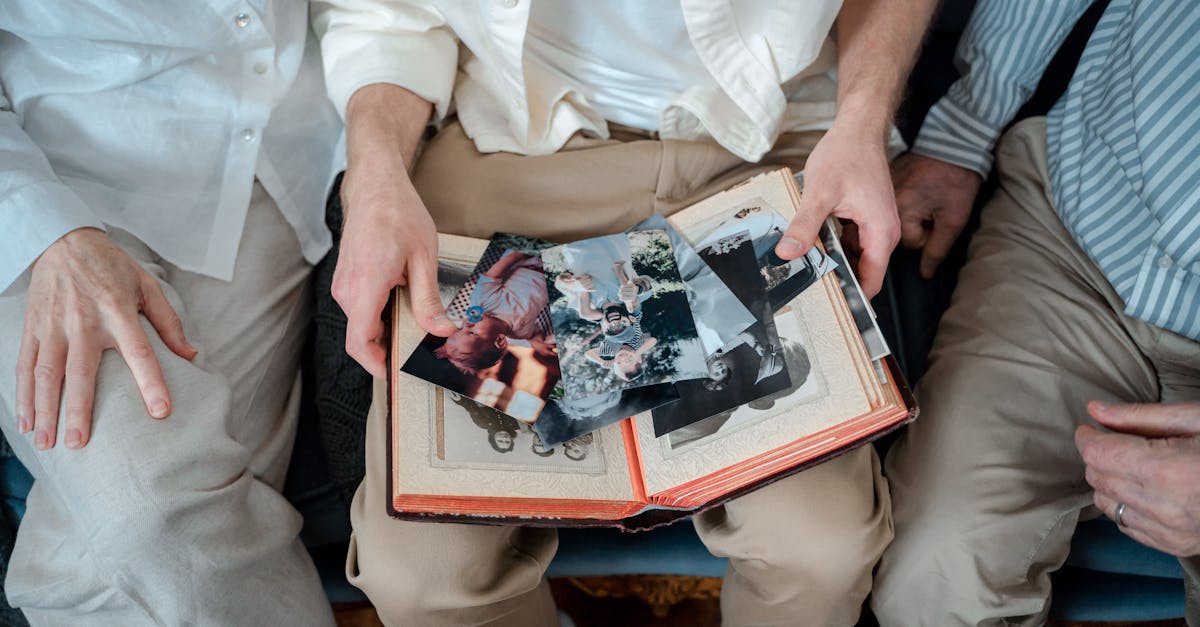
How to Build and Preserve Your Family Legacy: Easy Guide for Busy Parents
My grandfather told the same story about his first job at a shoe factory maybe forty times. I rolled my eyes at it as a kid. After he died, I would have given anything to hear him tell it once more. Not the facts of it. His voice telling it. The pause before the punchline. The way he said “boss” like it had two syllables.
That gap between a story you can repeat and a story you can still hear is the whole problem with family legacy. Most guides treat legacy as a filing project: gather, scan, label, back up. Useful, but it misses the part that actually carries a family. The account survives. The person does not.
This guide uses a different lens. I call it the Voice Before Transcript method. Capture the living voice first, then let the written record follow. It is built for parents who have fifteen minutes between bedtime and laundry, not a free weekend. Five steps, ordered by what disappears fastest when someone passes. It is the legacy-focused companion to a broader plan to preserve family stories before it is too late.
In our memory-book work at Fireside, I have seen this play out in a way the numbers made hard to ignore. Across 14 family memoir projects, in 11 of the 14 the recipient opened the voice recording before they read a single page of the printed transcript. People reach for the sound first. So we build for the sound first.
Why the Voice Comes First (and What the Research Behind It)
There is real evidence that knowing your family stories changes how children turn out, not just how sentimental they feel.
In the 1990s, psychologists Dr. Marshall Duke and Dr. Robyn Fivush at Emory University built a 20-question measure they called the “Do You Know?” scale. Do you know where your grandparents grew up? Do you know an illness or something terrible that happened in your family? They asked these questions of children, then ran a battery of psychological tests.
“The more children knew about their family’s history, the stronger their sense of control over their lives, the higher their self-esteem and the more successfully they believed their families functioned.”
- Dr. Marshall Duke, professor of psychology at Emory University, on the “Do You Know?” scale research
The “Do You Know?” score turned out to be one of the best single predictors of a child’s emotional resilience. Crucially, the children were not memorizing dates. They were absorbing a narrative, usually heard out loud, at a dinner table, in somebody’s actual voice.
That is the case for voice first. A transcript transfers information. A recording transfers a person. The Community Foundation of Greater Birmingham makes a related point in its legacy guidance, noting that future generations will appreciate hearing grandparents they never met describe their stories in their own voices. Build the legacy your kids will actually absorb, not the one that looks tidiest in a folder.
Five Steps, Ordered by What Disappears First
Here is the full method before we go deep. The order matters: each step protects something more fragile than the last.
- Record the voice. A fifteen-minute phone recording of one elder, this week.
- Capture the artifacts. Photos, objects, and recipes, but tied to the voice that explains them.
- Organize lightly. A simple home for the files so nothing gets lost in your camera roll.
- Make it sharable. Turn raw audio and photos into something a child will hold.
- Preserve for the long run. A hybrid backup so a dead hard drive does not erase a person.
Step 1: Record the Living Voice (Do This First)
Open your phone’s voice memo app. That is the entire toolkit. No studio, no fancy microphone, no perfect lighting.
Call or sit with one older relative and ask three or four open questions. Skip “tell me about your life,” which freezes people. A fuller list of questions to interview your grandparents helps when you run dry, but try these to start:
- What is a smell that takes you straight back to childhood?
- Who taught you something you still do every day?
- What is a story about me, or about my parent, that I have probably never heard?
- What was the hardest year, and how did the family get through it?
Keep it to fifteen minutes. Short sessions respect their energy and yours, and a short session actually happens. A marathon interview you keep “saving for the right weekend” never does. If they ramble, let them. The ramble is where the voice lives.
Step 2: Capture Artifacts, Tied to the Voice
Photos and heirlooms come second because objects without a story are just clutter that outlives its meaning. A photo of a kitchen is a photo. The recording of your grandmother explaining how she rolled bread dough in that kitchen is legacy.
So pair them. When an elder mentions an object on the recording, photograph that object and note the timestamp. Pick one or two photos at a time, not the whole shoebox. Let your kids help by labeling who is in each shot. A chore becomes a family hour, and they hear the story while they work.
Step 3: Organize Lightly, Not Perfectly
After a few weeks you will have clips, photos, and scribbled notes. Give them a home before they vanish into a 9,000-photo camera roll.
Make a small set of folders: “Voices,” “Photos,” “Recipes,” “The Hard Years.” Use a naming pattern you will not have to think about, like Grandma_FirstJob_2026-06. Consistent names are the difference between finding a clip in ten seconds and never finding it again.
Set a recurring ten-minute reminder once a month to move new files into folders. Ten minutes monthly beats a heroic eight-hour session you schedule and then cancel.
Step 4: Make It Sharable
A file on a hard drive is not a legacy a child reaches for. Turn the raw material into something physical or playable.
Two simple paths: a photo book with captions pulled from the recordings, or a short audio playlist your family can listen to in the car. The point is that a seven-year-old can press play or turn a page without you. When kids see their own face beside a grandparent’s, and hear that grandparent’s voice, the connection stops being abstract. A family memory book is the most durable version of this keepsake.
This is exactly where the voice-first order pays off. Because you recorded sound in Step 1, your keepsake can carry the actual person, not a paraphrase of them.
Step 5: Preserve for the Long Run
Digital files fail silently. A dead phone or a lapsed cloud account can erase a voice forever, and you will not get a warning.
Use a hybrid plan: cloud copy plus one physical copy of the things that matter most. Pick one fixed day each year, a birthday or a holiday, to back up new files and confirm the old ones still open. Treat it like changing smoke-detector batteries: small, boring, and the reason nothing burns down. For a deeper rundown of formats that survive decades, see these proven methods to preserve family memories.
Tools to Make Each Step Easier
You do not need to buy anything to start. But if you want a tool for a specific job, here are honest fits.
- For Step 1 (recording): Your phone’s built-in voice memo app. Free, already in your pocket, good enough.
- For Step 4 (a finished keepsake): Fireside sends one weekly story prompt to an elder, compiles the answers into a hardcover book, and keeps the actual voice recording alongside the printed text. Unlike services that save only a typed transcript, Fireside preserves the recording, which is the part families reach for first. This fits the parent who wants the result without running the project themselves.
Pick the lightest tool that gets the next step done. The best system is the one you will actually use twice.
How the Voice-First Method Compares to the Usual Advice
| Approach | What it captures | Pros | Cons |
|---|---|---|---|
| Voice-first (this guide) | The person: tone, pacing, the actual voice | Captures the irreplaceable sound before it is gone | Audio needs a backup plan |
| Transcript-only (typical guides) | The account: facts and dates | Easy to search, easy to print | Loses the person; reads flat |
| “Do it all” book project | Everything, eventually | Comprehensive if completed | Too big for busy parents, usually never starts |
| Doing nothing yet | Nothing | No effort required | Total loss when someone passes |
The honest takeaway: any method beats waiting, but a transcript-only plan quietly throws away the part the research says children absorb most.
Pre-Interview Checklist
Before your first fifteen-minute recording, run this list:
- Charge your phone past 50 percent.
- Open the voice memo app and do a five-second test recording.
- Write down three open questions (use the ones in Step 1).
- Pick a quiet room with the TV off.
- Tell the elder this is just a chat, not a performance.
- Press record before the small talk ends. The warmup is often the best part.
Common Mistakes to Avoid
The biggest mistake is waiting for a “perfect” moment with a free afternoon. It never arrives, and meanwhile the person ages. Fifteen minutes this week beats two hours next year that never happens.
The second mistake is capturing only photos. Pictures without the voice behind them lose their meaning within a generation. Nobody is left who can say who that smiling man in the back row was.
The third is keeping everything in one place. One backup, always. A second hard drive or a cloud account is cheap insurance against a single point of failure.
Frequently Asked Questions
What is a family legacy?
A family legacy is the sum of the stories, culture, and values you inherit from your ancestors and pass to your children. It runs far deeper than money or property. As the Community Foundation of Greater Birmingham puts it, it is the personal anecdotes and culture that reveal what a family values, not just how its wealth was made.
How do I preserve my family legacy if I have no free time?
Start with one fifteen-minute voice recording of one elder this week, using your phone. The voice-first method is designed around small, repeatable sessions that fit between everyday tasks, not a single large project you have to block out a weekend for.
Why record the voice instead of just writing the story down?
A transcript keeps the account; a recording keeps the person. Research from Emory University’s Marshall Duke and Robyn Fivush found that children who know their family stories, usually heard out loud, show stronger resilience and self-esteem. The sound carries the part a child absorbs. In our 14 Fireside memoir projects, 11 of 14 recipients opened the voice recording before reading any transcript.
What questions should I ask grandparents to capture their stories?
Ask open, sensory prompts rather than “tell me your life story.” Good examples: a smell that takes them back to childhood, who taught them something they still do daily, the hardest year and how the family got through it, and a story about you they have never told. Open prompts unlock real memories; broad ones freeze people.
Do I need special equipment or tech skills?
No. Your phone’s voice memo app is enough to capture audio, and your phone camera is enough for photos. The only paid step is optional: a service or photo book at the end if you want a finished keepsake without running the project yourself.
Start Your Family Legacy This Week
Pick one relative whose voice you would miss the most. Open your phone’s voice memo app right now and record a five-second test so the tool stops being scary. Ask them three questions this weekend and get started with a single fifteen-minute call. Save that recording to one folder and back it up the same day. Try the voice-first order on just one elder before you scale to the rest of the family. Keep the sound, not only the summary, because that is the part your children will reach for first.